Posts mit dem Label museums in Berlin werden angezeigt. Alle Posts anzeigen

Mittwoch, 12. März 2014

From Museum of Medical History to Surrealist Objects, Berlin has it all

Spring was early in Berlin this year, and the winter almost non-existent! Overwhelmed by so many sunny days, I spent a lot of Sundays outdoors, discovering old corners and revisiting old ones. Not necessarily on purpose, one of those days, I decided to discover by foot the area around Invalidenstrasse. I left the bus around Reichstag/Bundestag that I visited at least twice since moving here. Right now, the visitors should register online a couple of days in advance. There are long lines of visitors always, but as far as I remember, it goes relatively easy and within 30 minutes you can start the tour. 
After the visit, one can admire the new diplomatic and governmental architecture, a topic that I promise to come back in detail soon. As it was Sunday, there was no one to be seen around the otherwise busy offices.
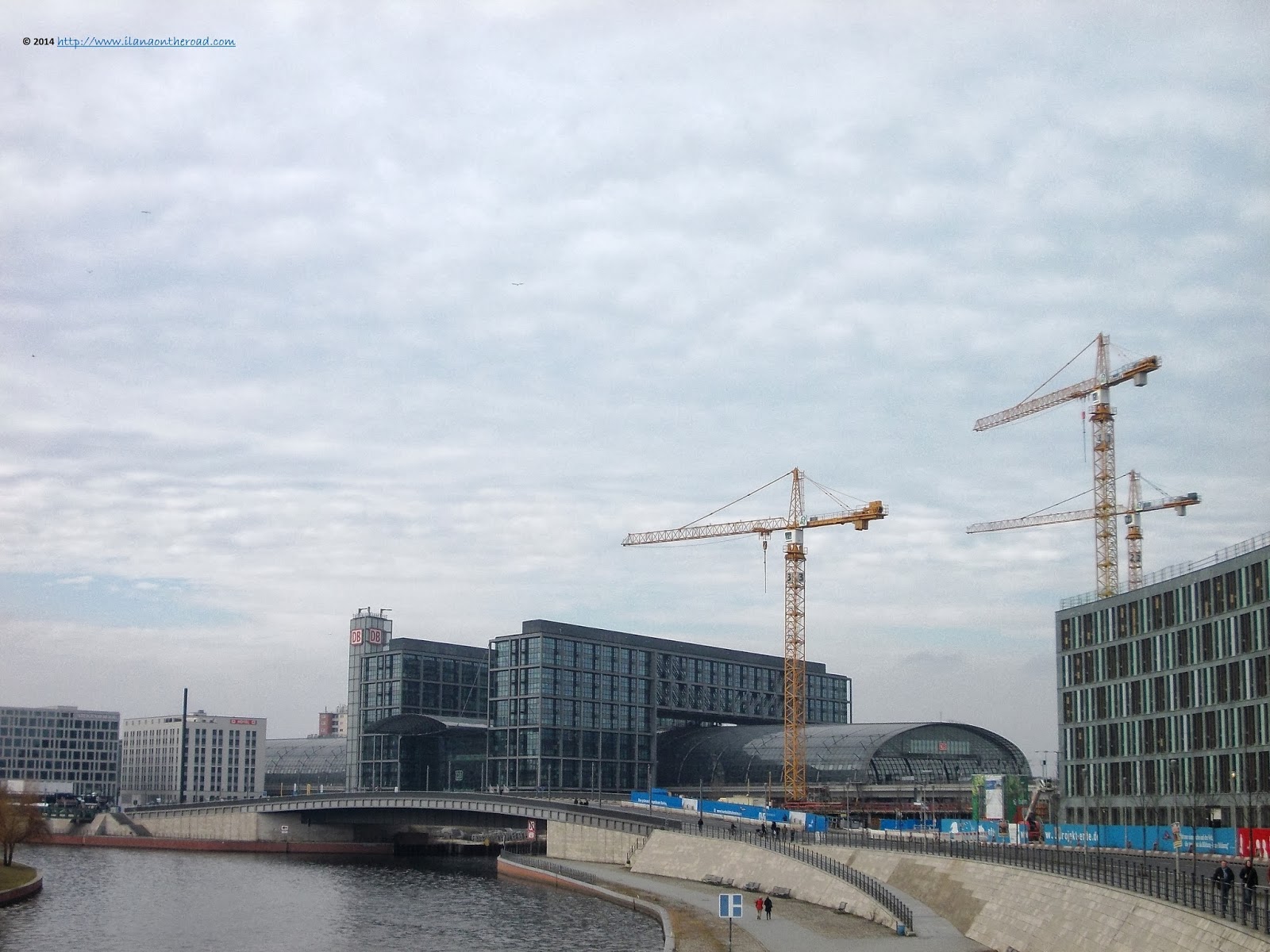
The Central Station/Hauptbahnhof remains a benchmark of my first ever visit to Berlin and Germany. Since then, almost 10 years later, there is still a lot of work around as the constructions seem to be a permanent work in process not only in this area, but in the city in general. 25 years after the fall of the Wall, the city is still looking for its architectural identity. 
But there are also things that don't change too much, some of them for many centuries. The Museum of Natural Science is a destination in the area for over 200 years. I visited it a couple of weeks before and was surprised to see how many people of all ages are curious about science. At the first floor, there is a collection of minerals from all over the world. After the separation of the city, the museum was part of the GDR and many scientific travels took place in former communist countries, such as the Soviet Union, Cuba or Mongolia. 
There is a lot of work going on around Invalidenstrasse right now, for the reconstruction of the tram line. The area promise to be one of the new centers of attraction in West Berlin. There are many bars and hotels around, many newly open, such as the welcoming Hotel i31, that I visited a couple of months ago. 
Close to the Central Station, if you walk for around 10 minutes, you will discover the medical compound of Charité hospital, the oldest and most famous medical institution of the city, and the largest university hospital in Europe. Statues of famous characters of the German medical history are everywhere. One of them is Albrecht von Graefe, labelled the 'father' of German ophthalmology, whose son bearing the same name chose to follow a sinister far-right career.   
Many of the buildings were originally erected at the beginning of the 20th century. Kaiserin Friedrich Haus, is nowadays part of the scientific network of the hospital, but during the GDR it hosted the Academy of Arts. 
We enter inside the Charité compound, walking silently the labyrinth of sober red bricked houses. The hospital was initially established at the beginning of the 18th century, in the aim to counter the effects of bubonic plague. It was used for a long time as a charity (hence the name, in French, sign of the constant influence of the French culture in the Brandenburg area) hospital for the poor. Nowadays, is treating high-end personalities and any kind of maladies. One of the recent hosts is the Ukrainian politician Yulia Tymoshenko. 
The Museum of Medical History was on my priority list for a very long time. Now, I was finally able to have a visit that included an exhibition about the evolution of the relationship between doctors and patients. A whole level is dedicated to various physical deformities and the evolution of investigation practices. If you visit the museum if children you should sign a declaration that you agree that they are exposed to such scientific realities.
The museum also preserved the anatomical theatre, once used for dissections. There are also a section covering the use of medicine for political means during WWII, relatively in a discrete corner.
A trip to this museum is very intense, but otherwise, on the opposite part of the road, there is the more brain friendly Museum of contemporary arts, in the former Hamburger station.
But we did not want any museum for the moment, until walking Torstrasse we found a very special one: The Surrealist Museum of Industrial Objects. The name reminds me of my long 'dadaist' period and is hilariously sympathetic. 
From there, we walked a little bit more till Oranienburgerstrasse, a colourful oasis full of locals and visitors enjoying the first sights of the spring. Hungry, decided that it is about time for a stop and the Kebab Baba, a Turkish place I didn't notice before - maybe because is near the very popular Dada Falafel, where I used to go quite often some time ago - was inviting enough. But despite the traditional interior, I preferred to eat outside, enjoying both the food and the show of the street.
With my 'veggie dish', I tried to catch up with the lost energy after hours of wandering the streets and museums. The combination was great: salad, a borek, falafel, potatoes, eggplants and couscous. Authentic, rich and healthy enough. A good treat at the end of the day.
After a couple of months when I avoided to walk for too long in the city, the spring reminds me that Berlin can be not only beautiful, but interesting enough to keep me outside for more than 8 hours. It can be the beginning of a new old routine.

Freitag, 7. Februar 2014

At the Historical Museum

Winter in the city isn't pleasant, especially when it's too cold. Time to check what are the indoor possibilities and if I'm not in the mood for a movie, a museum is second on the list. And the German Historical Museum is one of those museums that I wasn't too keen to visit. Time for a change. The building is a combination between old style architecture of an old Arsenal building and the modern glass-and-steel touch added in the new wing by I.M.Pei. 
The permanent exhibition is an introduction to the German history in images in artefacts. From the big lobby, where monumental antic statues are neighbouring an equally monumental Lenin. The museum is busy, with groups or individual tourists ready to spend at least 3 hours leaning more about the German history. Most explanations are both in German and English.
The historical excursus is not only presenting facts and chronologies, but is adding a variety of details from the daily life which may give a better picture of both the culture and civilization.  
Through the centuries, it introduces the life style and the cultural habits, presenting the mentalities through the angle of what the French school of history used to call the 'long durée'. But the main focus is constantly maintained: the German lands and later on, Germany. 
Symbols and economical developments, industry and architecture are well polished to enter the big narrative. One of my favourite corners are those dedicated to geographical discoveries, because this is how people are supposed to enlarge their horizons and turn into more tolerant - and human, after all - individuals.
The museum has a large collection of ads and slogans and old advertising, including of political nature. Same of them are presenting the mobilization ads during the First and Second World War. 
The permanent exhibition also features the dark side of the European history: the WWII and the killing of 6 million Jews. This is a section that is presented through facts and photographies, going diplomatically through what you are expected to see, but without a clear outline of the roots of the phenomenon. 
One of the main things I noticed during my history studies was that once in a while, after reading too much historical books, I should take a break. And it is what I was doing, after long hours of being exposed to references, lots of information and details. Life might be much easier without too much past, but it still offers many lessons to be avoided by future generations. 

Donnerstag, 6. Februar 2014

Walking around Köllnischer Park

Almost five years after I moved to Berlin, there are so many places to see. I keep telling this myself while on the way to new destinations. It seems that the list is never ending. As in the last months of 2013 I spent a lot of time in the city, I decided to book more 'inland' trips. One of them was around a historical area: Köllnischer Park, in Mitte. Colln used to be the name of one of the two cities which came together to form Berlin. At the beginning of the city's history, this area used to be outside the city's borders. 
I arrived at the Märkisches Museum U-Bahn station, in Mitte. When the city celebrated 750 years, the then-GDR authorities decorated the station, named for the museum dedicated to Berlin. On a usual weekly day in winter, there were not too many people around, and the Spree area seemed to wait to be brought to life by the spring.
If you want to know how and why I spent around 3 full hours discovering the buildings around the relatively small park, the answer is that there is a high concentration of things to see and learn about. Most buildings around are made of red bricks, the usual choice for official buildings in the 16-18th century. In the former gymnasium around the corner, the founder of the modern geology and a researcher of the polar area, Alfred Wegener, studied.  
The weather was pleasant enough to take a tour of the park. Different types of status and decorations are adorning the area. Many tourists and also locals are coming here for the two bears - real ones - that can be spotted sometimes in their cage in the middle of the park. When I visited, despite several attempts, the bears were out of sight and I left the area with a sigh of regret.
Another architectural landmark of the area is the AOK building. The red bricked sample of Expressionist architecture was erected in 1931-1932 for a German health insurance company, still operating nowadays. During the GDR, it was used as an address of several political associations, but was returned to the company after the end of the separation. It's delicate presence brings a lot of elegance to the park.
Various styles and historical stages and artistic communication languages are meeting in the park. One of the most beautiful is a statue of Hercule fighting the Nemesian lion, very close from the Stadtmodelle, a section of the Berlin townhall in charge with the city development.
More than in many European city, the urban development is an interesting story to follow. The Stadtmodelle exhibition, that can be visited for free, offers diverse 3D representations of the city development, before, during and after the Cold War. It also has a computer database with different projects developed since 1990s. While looking at various corners of the city from different angles, I can't stop thinking how the city would have been without the Wall. Berlin is an interesting and dynamic city, but in terms of beauty and architectural coherence, it is many centuries behind, I dare to say.
I haven't been to the Märkisches Museum because I always assumed that I know a lot about the city. It is never enough, and more lessons are always welcomed. This time, I not only learned about the historical development of the city, but also about its natural beauties and its fauna, whose representatives - such as foxes, boars and wild rabbits - can be often seen not only in the forests around, but also sometimes waiting quietly the green lights. Berlin is the greenest capital city of Europe with the highest concentration of parks and green areas in general.
The permanent exhibitions present a lot of sequences of the daily life in different historical stages, such as one dedicated to fashion and especially hats. I loved especially a collection of old photographs, some of them updated with colours, presenting main events and gatherings in the city at the beginning of the 20th century. A special section is dedicated to the life of Jewish citizens of Berlin, a project of Hans and Louise Richter Foundation. The hall of mechanical musical instruments is a big attraction for the little visitors, as the collection of toys.
After checking once again to see if the bears were out - they weren't - I made another tour of the park. Some coloured pieces of the wall are a reminder of the many faces of the history of this city that despite its ups and downs and some corners of ugliness, still remains my home for now. 

Dienstag, 13. August 2013

Enjoying the silence. At the Museum of Musical Instruments.

Only the sound of the photo cameras broke the overwhelming silence at the Museum of Musical Instruments. A Tuesday afternoon, on a very hot day, there were many people visiting the relatively small place gathering instruments from all over the ages and countries. But, somehow, even the little children wandering through the glass boxes were extremely silent. Many were enjoying the audio guided tours, but not few of them, including me, preferred to go from a place to another, have a look at the instruments and set up their own musical stories.
Situated a couple of minutes away from the Berliner Philharmoniker and the busy Potsdamer Platz, the Museum also hosts a research institute and a music library. Almost 4,000 instruments are hosted in the exhibition space. Every Saturday, there are tours and concerts taking place, for children and adults. After almost one hour of visit at the museum, I felt the need of a serious guidance, as the instruments presented - many of them former properties of famous historical personalities such as the flutes from the collection of Frederick the Great or Benjamin Franklin glass harmonica - also had a very important social and historical side that are largely unknown to the non-specialist. The children were enjoying the exhibition as any instrument was like a little world of surprises in itself. So bad that it was not anyone able to play something for them - like it happened at a similar, but smaller museum in Estoril, Portugal, when the guide put out of the glass boxes some of the instruments and showed us how does they work. 
At the first floor, more modern instruments are presented, as well as a very complicated article about models of music perception. I must recognized that I was already a bit tired after many other museums and cultural encounters and did not have the proper mental set-up for such a difficult exploration. At the same level, there are many guitars - the ground flour is apparently dedicated to pianos and organs, as well as flutes and harps - but also a simple explanation about how the instruments are made. 
The visit at the museum is a very relaxing experience. I only need to find a day when I can also be part of a full guided tour. 

Sonntag, 28. Juli 2013

A Foreigner at Brücke-Museum

I wanted to visit Brücke-Museum for a long time, but unfortunately I couldn't attend one of the guided tours offered by Kunstwege. This very hot Sunday, with around 36+ Celsius in the air, I decided that instead of going to a lake or beach or any other 'light' destination, I will go to this museum. Finally.
Around 30 minutes after leaving the house, following carefully the arrows from the bus station Puecklerstrasse, I had reach my destination. But before starting my 90 minutes stay, I took 2 minutes to enjoy the coldness of the air condition. Not something usual in Berlin, so please forget my apparent childish attitude.
The museum is hosted in a small villa, in the middle of a rich vegetation. The ticket counter is right at the entrance, near the souvenir shop - offering postcards with paintings from the exhibition or from the collection of Brücke artists. The exhibition hall has the shape of a simple maze. I did not discern any specific organisation criteria for the paintings, but the authorship. Most big names of the Brücke movement, an artistic group created in Germany at the beginning of the 20th century, are represented, such as Max Pechstein, Ernst Ludwig Kirchner, Erich Heckel or Fritz Bleyl. 
Wandering between grotesque and emotional outburst, influenced by Fauvism and expressionism, but also by pointillism and other French movements, Brücke reflects somehow the spirit of the time: the young rebels wanted to create bridges - Brücke - between emotions and reality, to translate in colours and violent lines their inner worlds. This can be better read in the coloured paintings, when the strong boiling feelings can be read in the erratic movements of the lines. 
The artists represented not only the grotesque world of varieté (with a more critical eye than Toulouse-Lautrec) but also landscapes, especially from Germany and Italy. It seems that regardless of the style or artistic preferences, Italy will hardly miss from being represented in the artistic movements as both object of representation and source of inspiration.
The museum is small, with many comfy chairs where the visitors can rest while reading books about the paintings and the history of the movement. Regularly there are organised seminars and discussions as well workshops for children. I did not expect to see so many people visiting, but most probably the hot weather creates a lot of opportunities for art lovers.
I enjoyed the exhibition, and learned a little bit more about this movement and the history of German painting. Strongly recommended to any intellectual soul visiting Berlin.

Montag, 20. Mai 2013

Sunday at the museums

When everyone was very busy watching the street parades at the Festival of Cultures, I decided (again) to be against the mainstream and see some exhibitions that I had on my list since a long time. Even though a small Turkish gathering with a lot of good food and colourful scarfs reminded that even in Charlottenburg there is time for celebration, I was not impressed and switched the U-Bahn for going to Kreuzberg. I continued my schedule and spent some pleasant hours at the museums around the Charlottenburg Schlosss.

Discovering the genius of Picasso

Out of the three museums I visited, the collection hosted by the Berggruen Museum was completely new for me. The collection was created by Heinz Berggruen, a friend of Picasso who dedicated at least one work to him. He had left Germany during the dictatorship and got back to Berlin only in the 1990s after a brilliant career in the world of arts from Paris and London. After his death, his family is continuing his legacy, taking care of an impressive collection of modern art, mostly comprised by the works of Picasso, Braque, Matisse and Cezanne, as well as Klee (with paintings of a higher quality compared to what I saw recently at Martin-Gropius-Bau) as well as beautiful sculptures by Giacometti. I do not appreciate all Picasso's works, but I cannot ignore his genius explained by many of the early drawings and paintings included in the collection. Someone with such a genuine talent and inspiration cannot do anything but paint all the time, trying different styles and ending up by decomposing the human figure into small little pieces, because the classical techniques are not enough. A highly spiritual experience that can be continued in the garden at the shadow of some grotesque creatures.

A drop of history in the cup of tea

The orange cup, by Marguerite Friedlander-Wildenhain
The garden is shared with a museum that I've visited before, Brohan Museum. This time, I was interested in the temporary exhibition that ended up today dedicated to the Avantgarde of Jewish Women in Ceramics (1919-1933) featuring interesting and very interesting personalities of their time: Marguerite Friedlaender-Wildenhain, Margarete Heymann-Marks and Eva Stricker-Zeisel. All of them had the chance to escape Germany in time after formative years spent in the ceramic factories or around the Bauhaus movement. Stricker-Zeisel had an astonishing life, with 16 months spent in the Soviet prisons and a lot of historical adventures in a crazy century
 I was lucky to see the exhibition, because there were many attractive and colourful models that brought a lot of pleasure to my eyes.

La plus belle, by Max Ernst


Back to Surrealism

My last cultural stop of the day was at the Collection Scharf-Gerstenberg, reuniting several surrealist works, by more or less famous artists, such as Odilon Redon, Oscar Dominguez, Victor Brauner, Francis Picabia, Miro, Yves Tanguy, Goya and Alfred Kubin, among others. The first room, was a bit disappointing, but later on I felt brought back into the usual surrealist ambiance of artists that I love. The creator of the collection, Otto Gerstenberg was the president of Victoria Versicherung and a passionate admirer of arts. During the war, his collection was hidden in the bunkers and partially seized by the Red Army in 1945, many works being brought to St. Petersburg and Moscow. Since 1995, the works were returned and are on public display at the museum. 

Freitag, 10. Mai 2013

Another day at a museum - Kaethe Kollwitz Museum

Maybe I should rename my blog: a museum each day, as I try at least once the week to visit 2-3 museums and a gallery, and for the next weeks and days I have a full list of exhibitions that wait to be discovered. For the moment, I cope with a list of museums that I always wanted to visit in the last 4 years, but whose visit was delayed because always know that the museums will always be there for me. 

One example is Kaethe-Kollwitz-Museum, door-to-door to Literaturhaus, on Fasanenstrasse 24. I've been in the museum's garden at least once, and admired the sculptures spread between trees and flowers, but the idea of entering the building as well never tempted me enough. Two days ago, I checked my priority writing list and decided to go.

I was welcomed by a nice lady, that offered me information in English - the leaflets are available in German and French too. The only warning was to do not use my camera and thus, I only have pictures from the yard and the entrance. As in the case of Kaethe Kollwitz herself, the museum is not a place to go when you are looking for some entertainment. Her works are the dark reflection of the difficult years of the first half of the 20st century: the first World War where her son was killed in the battles, the social unrest when she was on behalf of the poor and naked and the terror of the WWII. She was the first woman member of the Prussian Academy of Arts, and during the war she retired to Nordhausen. A long-time activist on behalf of the German socialists and communists, she visited Moscow in 1927 and dies at 77, in 1945, before the end of the war. The Cold War history in Germany associated her with the leftists ideals of the time, and there are pictures at the exhibition with Soviet soldiers pictures in the front of Kaethe Kollwitz's statue in Prenzlauer Berg, where she lived most of her time.

The exhibition is expanded on three flours. Most part is represented by graphics and lithographies, but also a couple of sculptures. Her figure appear repeatedly either as a self-portrait or as a representation of the figures of women, especially mothers. It is only one self-portrait when she is laughing. Except with the figures of children, very expressive and full of life, her women are deeply sad, fighting with sorrow, poverty and loss. The works are in black and white, structured around themes such as: Germany's children are starving (1923), Weavers' Revolt, Soldiers' wives waiving good bye etc. Beyond the history of art, there is a lot of history that can be learned through her works. 

It is an useful exhibition for anyone interested in the history of Germany and in meeting the work of a German artist from the 20th century. I must confess that since I live here, I enjoy a lot visiting exhibitions of international artists but somehow the local artists are not too familiar to me and in the next weeks and months my plan is to find out more about them in a very systematic and scholarly way.

Sonntag, 13. Januar 2013

My lesson in German Art Nouveau

I cannot think twice when it comes to continuing my documentation about the cultural life of my city of Berlin. Sooner after I realized yesterday my ignorance when it comes to art deco in Berlin and in Germany in general, I decided that it is about time to visit Broehan Museum, situated relatively close to my place. 

Welcome to the world of German art nouveau
I expected to learn a lot about the topics I had on my list beforehand, but had no idea that so many people are visiting the museum at the same time with me, on such a cold Sunday afternoon. It was a kind of celebration organized at the last floor, with many elegant ladies and gentlemen, the type of Sunday fashion that I expect to meet on the streets of Wien, but still many of the visitors were on a pleasure trip with their spouses and families.

The museum is a relaxing option for anyone looking for a cultural discovery that does not require too many intellectual effort. You will find a lot of interesting interior design tips, with many pieces of furniture that were familiar to many of the visitors - 'my oma had this kind of...' were some of the most frequent observations I have heard there - and some good samples of the fine porcelain so common in many houses in Western Europe. 

For 6 Euro, I paid the entrance to a world that was about to forget. It reminded me a lot about my old cherry-wood big dinner tables and the creative tapestry of the chairs that we needed to left behind because the new doors and rooms of the new appartment were too small for allowing such a display of bourgeoisie. It also reminds me of the impressive collection of Gallés of one of my best friends from the old land, and the Limoges and Sevres and Bohemia porcelaine that we were using each week, even all we had at the time were some eggs and homemade cheese and tomatoes - hence my full sympathy for the absurd literature.  

The German art nouveau, it was mentioned, disappeared largely in the 30s and survived only in the US.  But you will not see the expansive Bohemian and Austro-Hungarian bold architecture, but the cute line of the coffee makers. Looks like a tank, isn't it?
Vive la bourgeoisie!
My favorite carner
Compared with the Bohemian and Austrian versions, the German art nouveau refugiated in the kitchen. At the beginning of the 20th century, under the influence of the French art nouveau, many German artists educated in France decided to add new lines to the food objects and pieces of furniture. The term art nouveau itself has some deep German roots, as it beared the name of an art gallery in Paris owned by Siegfried Bing, born in Hamburg. With the exception of two pieces of jewelry by Wilheml Lucas von Cranach, the majority of objects presented at the permanent exhibition has a direct functionality, that goes hand in hand with many interesting decorations, but also a couple of kitchesque appearances.

I was really impressed by the creative design of the lightning solutions. Not the usual crystal trees, but a lot of metal and glass artistry. This one is really gracious.
Nothing more, nothing less but a simple mirror, made of glass.
At the second floor of the museum there are exhibited some samples of paintings belonging to Berlin secessionism, none impressive enough to make me think too much. The worse in my opinion are Walter Leistikow's representations of Gruenewald. 

Till one of the boys doing the after-party cleaning warned me to do not take pictures - I suppose it was a joke, but was already tired and with my documentation lessons made - I collected a lot of nice images and colors, enough for warming my very cold afternoon in the city. 


A simple bed that reminded me of the Japanese simplicity. No wonder, as the art nouveau, at least during the decorative stage was strongly influenced by the Asian arts.

This creative plate is the work of creative minds that were living at the beginning of the 20th century. 

A plate from a big set aimed to be used for - what else - fish

The ridiculous trio for your bottle of whiskey or vodka: the nun, Napoleon and the Cossack

This is how I remember some of my old pieces of furniture

Especially those German artists influenced by the French art nouveau introduced a lot of natural , especially floral elements in their works. The size of this flower pot is similar to many Chinese type of pots.

Simplicity is the key to elegance

A counter with almost everything

Karl Hagemeister spent most part of his life in Werder and used as source of inspiration the luxurious landscape of Brandenburg.

Another member of Berlin Secession is Hans Baluschek, who portrayed the daily life of Berliner, with many paintings reminding of Doebler's Alexanderplatz

The teapot with chropoprase is the work of Wolfgang Tuempel,  an experienced gold and silversmith artist.

The Gruenewald paintings that I have not appreciate, signed by Walter  Leistikows

Bohemian influences, with the strong art-deco dimension

Wish I have my own Karl Hagenauer to build me such a personal mirror


Another welcoming corner

The Dutch Leerdam glass school

Swedish glass art